
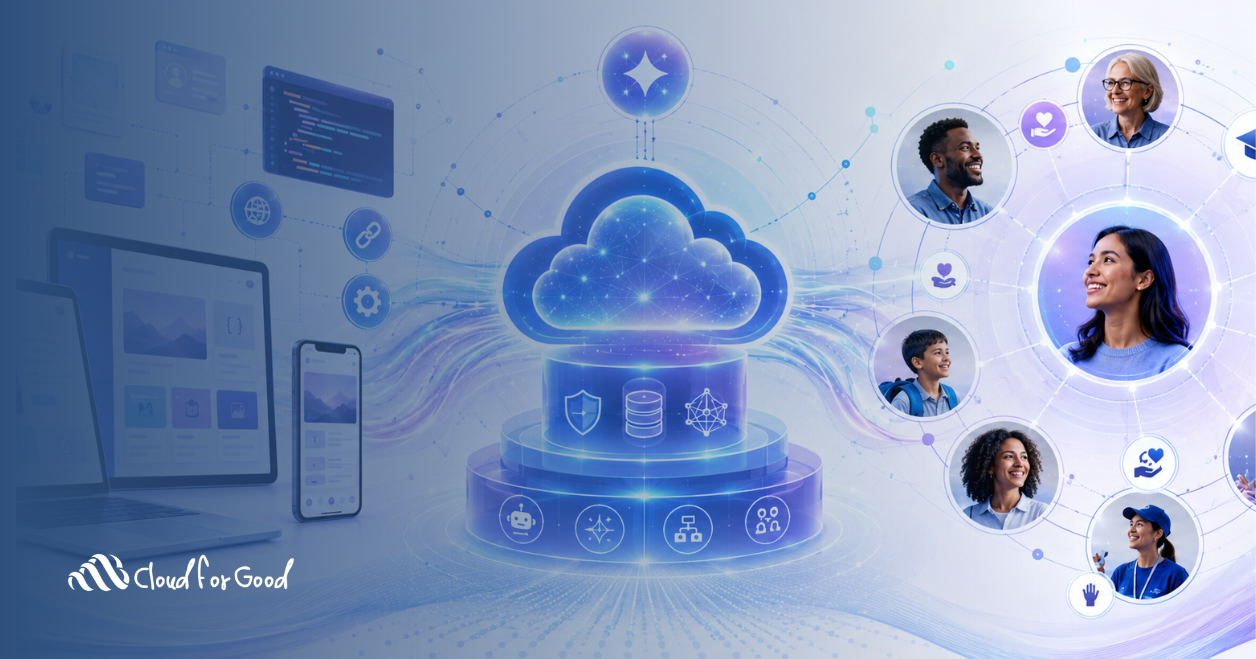
A new capability is available to Salesforce organizations, and it is generating a lot of conversation. Salesforce Headless 360 does not replace what already works well on the platform. It extends it. Across different sectors, therefore, understanding what this capability actually is and where it creates value is the first step toward knowing whether it belongs in your roadmap.
Two Parts: Headless and 360
The name has two distinct components, and both matter.
Headless refers to an architectural approach that separates the front-end experience layer from the back-end data and logic layer. In a standard Salesforce implementation, the user interface is delivered through Salesforce’s own presentation layer. Experience Cloud sites, portals, and Lightning components all render through the platform’s built-in UI engine. That model serves a wide range of needs well and remains the right choice for many organizations.
Headless architecture introduces a complementary model. Salesforce continues to house CRM Data, automation, AI, and workflows. The difference is that the front-end experience is built separately, using modern frameworks like React, Vue, or Angular, and connected to Salesforce through APIs. Your team gains more control over how experiences look, feel, and function without changing anything about the Salesforce back end.
Salesforce-Native Delivery
- Salesforce UI components and Experience Cloud.
- Front-end and back-end evolve together.
- Fast to deploy, deeply integrated.
- AI surfaced within the Salesforce platform.
- Strong ecosystem of managed packages.
Headless 360 Extended Layer
- API-first, any front-end framework.
- Front-end iterates independently.
- Purpose-built for each audience.
- AI accessible via MCP from any channel.
- Full back-end ecosystem intact.
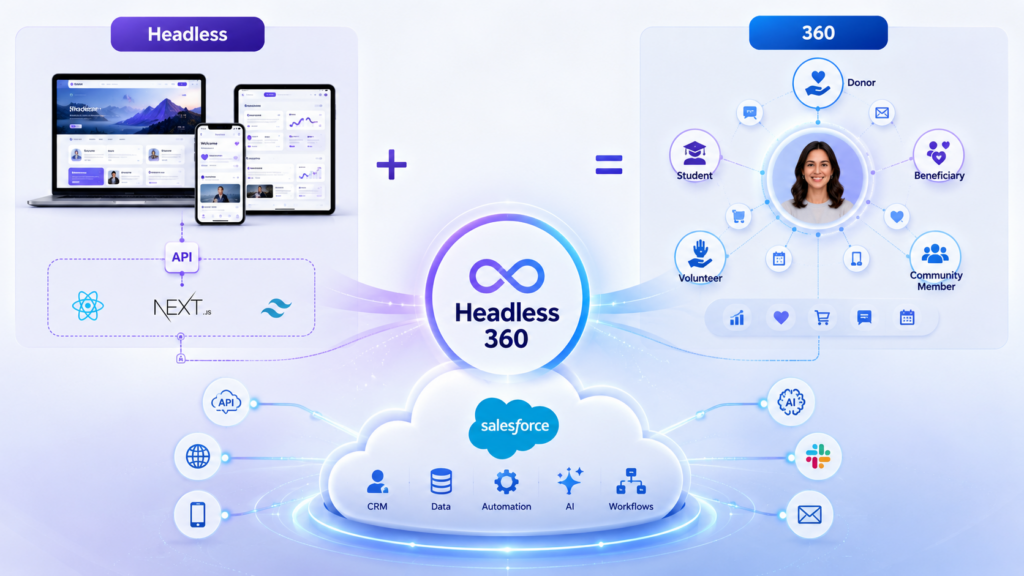
360 reflects Salesforce’s commitment to a complete, unified view of every constituent. Whether that person is a donor, student, beneficiary, volunteer, or community member, as a result, every interaction, transaction, and preference is captured and connected in real time. That continuous picture of each person is what makes personalized, informed experiences possible across every touchpoint.
Headless does not mean disconnected. It means your constituent-facing experiences can be built precisely to match your mission, while the full power of Salesforce continues to work behind the scenes.
MCP (Model Context Protocol) is the bridge that makes Headless 360 relevant to AI strategy. It enables Agentforce skills and the semantic search index to be accessed from tools and channels beyond Salesforce’s native interface. Over 30 Agentforce skills ship out of the box and can be surfaced through any custom front-end experience you build. Custom actions developed in your org can be extended to reach those same headless environments as well.
Where the Impact Sector Sees Value
Mission-driven organizations serve constituents whose relationships are deeply personal. A donor is not just a customer. A student is not just a user. A beneficiary, volunteer, or grantee is part of a broader mission relationship built on trust, service, and shared purpose.
As those relationships grow in complexity, the ambitions for digital experience often grow with them. Headless 360 gives organizations a way to meet those ambitions. As a result, it delivers more tailored, more connected, and more mission-specific experiences while keeping Salesforce at the center of data, workflows, and intelligence.
Personalized Constituent Journeys
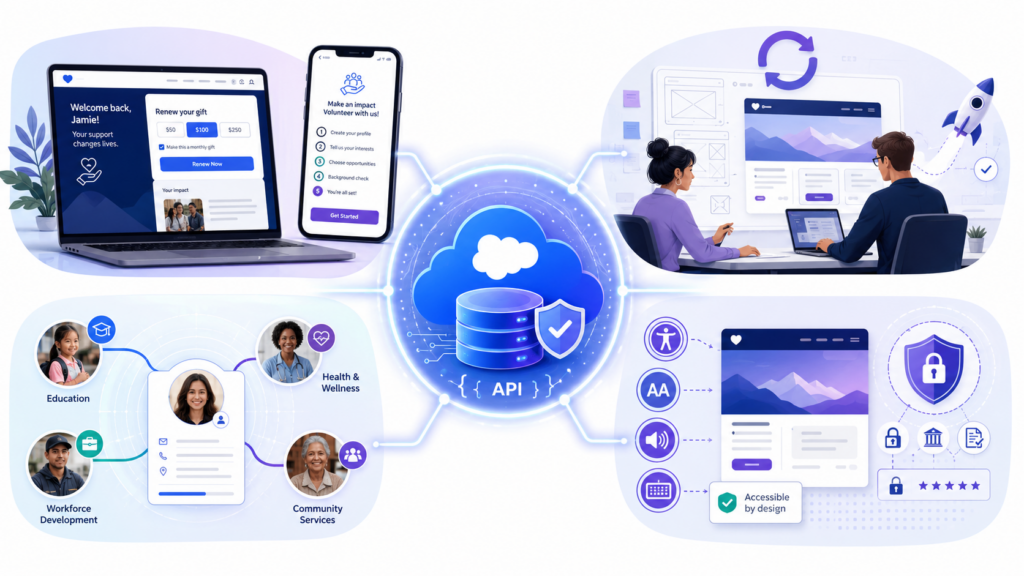
A donor renewal portal can feel completely different from a volunteer onboarding flow. However, both draw from the same Salesforce data foundation. Purpose-built experiences improve engagement and strengthen constituent relationships over time. Built to integrate directly into your organization’s existing website, they create a cohesive digital presence that feels intentional at every touchpoint
Faster Front-End Iteration
Since the front-end layer operates independently, teams can improve and launch new digital experiences without requiring back-end changes each time. That separation accelerates delivery and reduces the cost of iteration.
Unified Program Delivery
Organizations managing multiple programs can build experiences that connect back to a single constituent record. Case managers, program officers, and front-line staff all operate from the same source of truth.
Accessibility and Regulatory Compliance by Design
The headless model supports compliance by design. Front-end teams can build to WCAG standards and embed accessibility requirements directly into the presentation layer, independently of platform updates. Meanwhile, sensitive data governed by FERPA, HIPAA, or state grant requirements remains protected within the Salesforce back end. As a result, access controls, security, and data governance stay centrally managed. Each layer owns its compliance responsibility by design
Headless 360 and the Agentforce Era
The timing of Headless 360 is not coincidental. It arrives as Agentforce and enterprise AI are moving from experimentation into operational infrastructure. The two capabilities are designed to work together.
With a headless architecture in place, Agentforce skills can be accessed through MCP from any channel your organization builds. A student could receive proactive support through a custom mobile experience. A donor could get personalized recommendations in a branded portal. A program participant could interact with an AI-assisted intake process designed for their specific context.
The AI investment does not stay inside the platform interface. It extends to wherever your constituents are.
A note on metadata: In an agentic Salesforce environment, the descriptions your team writes for objects, fields, flows, and automations directly affect AI quality. Well-documented metadata helps Agentforce interpret and act on your Salesforce environment more effectively. Good data architecture and documentation have always mattered. Now it matters even more.
How to Know if Headless 360 Belongs in Your Roadmap
Headless 360 is not the right move for every organization at every moment. However, it deserves serious consideration if your organization is asking any of the following questions:
Are your constituent experiences as personalized and on-brand as your programs deserve to be?
Are you looking to reach constituents across more channels without managing separate data sources for each one?
Are your front-end and back-end teams frequently blocked by each other when trying to improve digital experiences?
Are you planning to invest in Agentforce and want those capabilities to reach constituents beyond the Salesforce UI?
If the answer to any of these is yes, it’s a conversation worth having.
Cloud for Good works exclusively with nonprofits, higher education institutions, the financial sector, healthcare, and public sector agencies. We bring mission-first thinking to every architectural decision.