Technology Alone Won’t Transform Your Fundraising — People Will

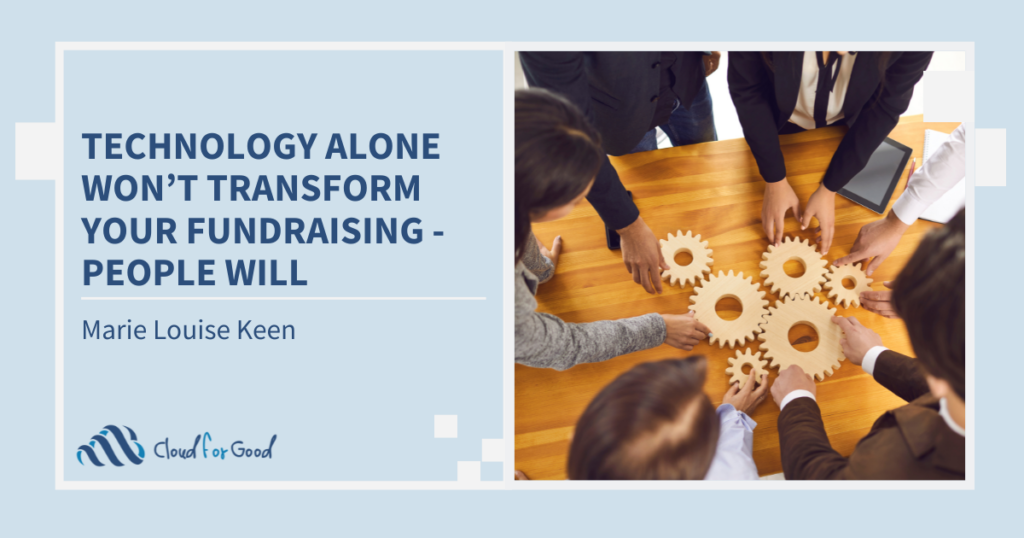
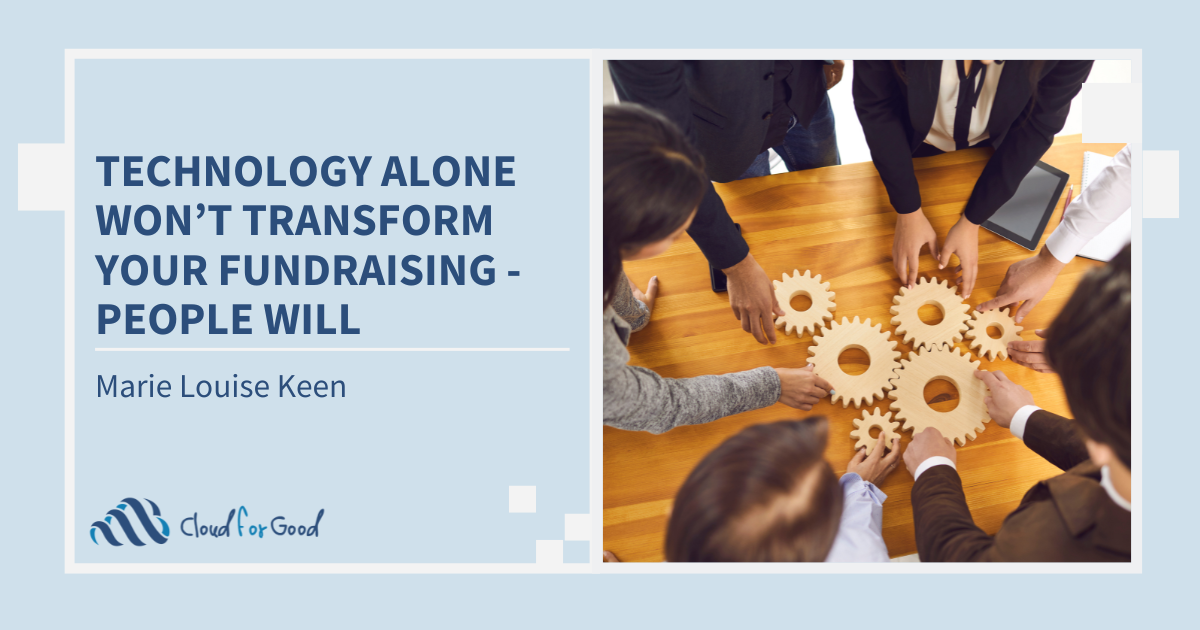
Technology Alone Won’t Transform Your Fundraising - People Will

Human-Centered Change Management Nonprofits Need During CRM Implementation & Data Migrations

When nonprofit and higher education institutions invest in new CRM systems, they usually do so with clear expectations: better donor visibility, stronger reporting, higher fundraising performance, and a modern platform that finally makes data work for them, not against them. To achieve these goals, a People-Centered CRM Migration for Nonprofits is often essential.

But the reality is this: technology doesn’t transform fundraising. People do. And this truth becomes most evident during a CRM data migration.

If fundraisers, gift officers, advancement staff, analysts, or leadership aren’t ready for what’s coming, no platform – no matter how advanced – will deliver the ROI expected from a major technology implementation.

Technology Enables Change. But People Power It

Across thousands of Salesforce implementations, Cloud for Good has seen a consistent pattern where:

  • The system works.

  • The data is mapped correctly.

  • The build is technically sound.

  • The integrations are stable.

  • Everything works, yet you aren’t seeing ROI

So why do some organizations still struggle after migrating to a new CRM?

It’s rarely because the technology didn’t work. The system is configured correctly. The data is migrated. The features are all there. And yet, fundraisers hesitate because they don’t trust the data. Teams fall back into old habits instead of embracing new workflows. Leadership waits for insights that never quite materialize in the reports they were promised. CRM modernization doesn’t fail because of technology. It fails because the human side of change is left behind.

What a Data Migration Really Disrupts: Trust

 Fundraising and advancement are living and breathing functions. A donor database isn’t “just data.” It’s the living record of relationships built over time, who gave, why they cared, and how trust was earned. It holds institutional memory, the history of every interaction, the promises made to donors, and the stewardship responsibilities that must never be lost.

So when a CRM migration changes screens, terminology, or the logic for metric calculations, fundraisers feel the impact immediately. Their natural responses sound like:
  • This doesn’t look like my donor.

  • Why is this prospect no longer active?

  • Why is my dashboard different?

  • Where did my notes go?

  • How do I know the data is correct?

  • Is this still the full picture?

Overcoming Resistance to Change: The Aspen Institute
"Time For Change" sign

These are human reactions rooted in fear, uncertainty, and a sense of loss of control. Without people-centered CRM Migration for nonprofits, they become the most significant barriers to CRM adoption.

Why Stakeholders Can’t Ignore Change Management During CRM Migration

A successful CRM migration is an organizational shift that reshapes how people work, make decisions, and engage with constituents. Whether an organization is moving to Salesforce Nonprofit Cloud or modernizing a legacy CRM, change management determines whether the system accelerates impact or creates friction. Three stakeholder groups experience this shift most directly: leadership, end users, and IT or administration teams.

Change Management for Leadership: Protecting ROI and Organizational Stability

From a leadership perspective, change management is essential to protecting the organization’s CRM investment and ensuring Salesforce delivers honest fundraising and operational outcomes. Executive leaders are responsible for maintaining revenue stability, stewarding donor funds, safeguarding donor and constituent relationships, and providing accurate, board-ready reporting. A CRM migration without structured change management can disrupt workflows, slow productivity, and erode confidence at the executive level. Thus, leadership teams expect change management to support efficiency, accountability, and measurable return on investment, making it a strategic requirement rather than a tactical afterthought.

Change Management for End Users: Building Trust, Confidence, and Adoption

For end users, fundraisers, program managers, volunteer coordinators, and frontline staff, the success of a CRM migration is defined by how confidently they can do their jobs in the new system. These teams rely on accurate data, familiar workflows, and clear visibility into relationships and outcomes. When a Salesforce CRM migration introduces new data models, interfaces, or processes without adequate preparation, it can create confusion, mistrust, and resistance. People-centered change management addresses this by providing clear communication, role-based training, and opportunities to work with real data before go-live. When end users understand the “why” behind changes and feel supported through the transition, adoption increases and Salesforce becomes an enabler of impact rather than a barrier.

Change Management for IT and Administration: Reducing Risk and Support Burden

For IT and administration teams, change management is critical to maintaining system stability and long-term scalability. These teams focus on data quality, integrations, governance, user support, and performance optimisation. Even when a Salesforce CRM migration is technically successful, a lack of user readiness can overwhelm IT teams with support requests, workarounds, and misaligned expectations. Without people-first change management, IT often becomes the complaint center after go-live, addressing issues rooted in process and training rather than technology. Effective change management sets clear expectations, aligns workflows, and prepares users in advance, allowing IT teams to focus on optimization and innovation instead of post-launch firefighting.

An Example of Human-Centered Change Management: JCL’s People-Led Salesforce Success

An example of Human-Centered Change Management achieved by Cloud for Good is the Jewish Community of Louisville (JCL)’s People-Led Salesforce Success. 

When the Jewish Community of Louisville (JCL), a merged entity combining a century-old community center and a major fundraising Federation, decided to modernize its donor and constituent operations. JCL was managing fundraising, programs, membership, early childhood education, and community engagement across multiple legacy systems. Migrating to Salesforce required a fundamental shift in how teams collaborated, shared data, and understood their roles. 

Cloud for Good led the organization through a deeply human-centered transformation, emphasizing communication, trust-building, and intentional training long before cutover. 

What Made the Transformation Work? Change Management. 

Instead of a lift-and-shift migration, Cloud for Good facilitated: 

  • pre-launch virtual and in-person training 
  • hands-on practice using real migrated data 
  • strategic communication around process changes 
  • empowerment of internal superusers 
  • immersive onsite learning sessions 

This was a culture change. Because staff had time to learn, validate data, and understand the “why” behind new workflows, adoption surged. 
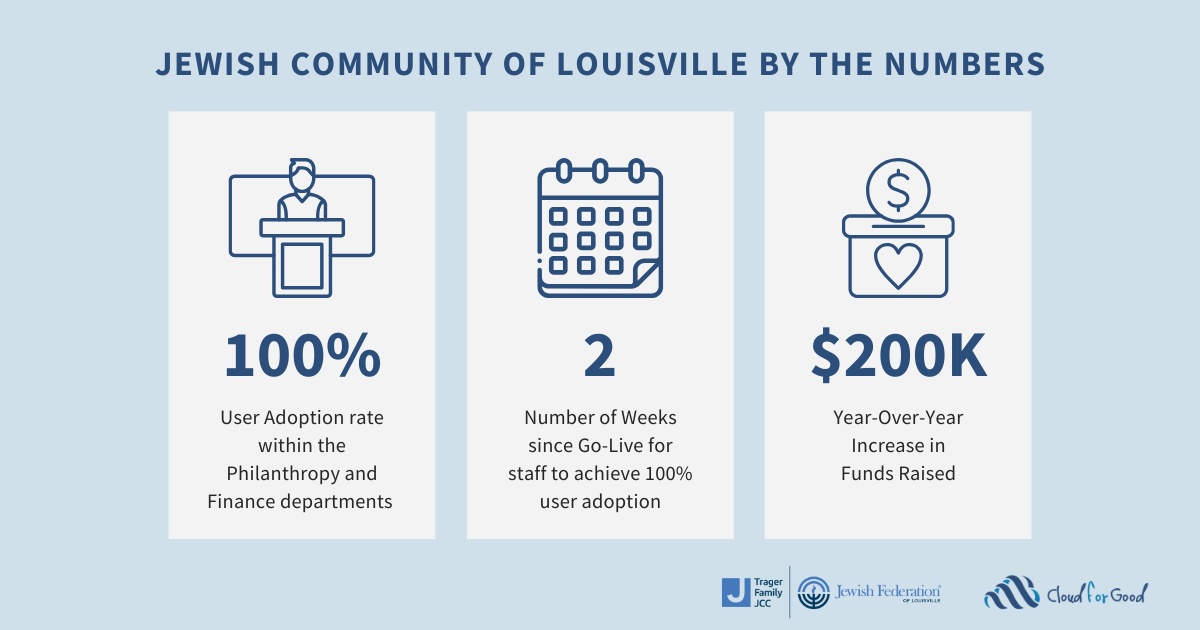
Successful Migration

Return on Investments highlighted-

1. 100% adoption across philanthropy and finance teams within two weeks
2. Immediate collaboration across historically siloed departments
3. Real-time, cross-system visibility for fundraising and programming
4. Staff confident enough to use Salesforce in live telethon decision-making
5. $200,000 year-over-year fundraising increase tied to data-informed outreach 

JCL’s Senior Director of Planned Giving summarized it perfectly: 

“This kind of user adoption doesn’t happen by accident. It was the product of preparation, strategic communication, and our commitment to making this transition meaningful for our team.”
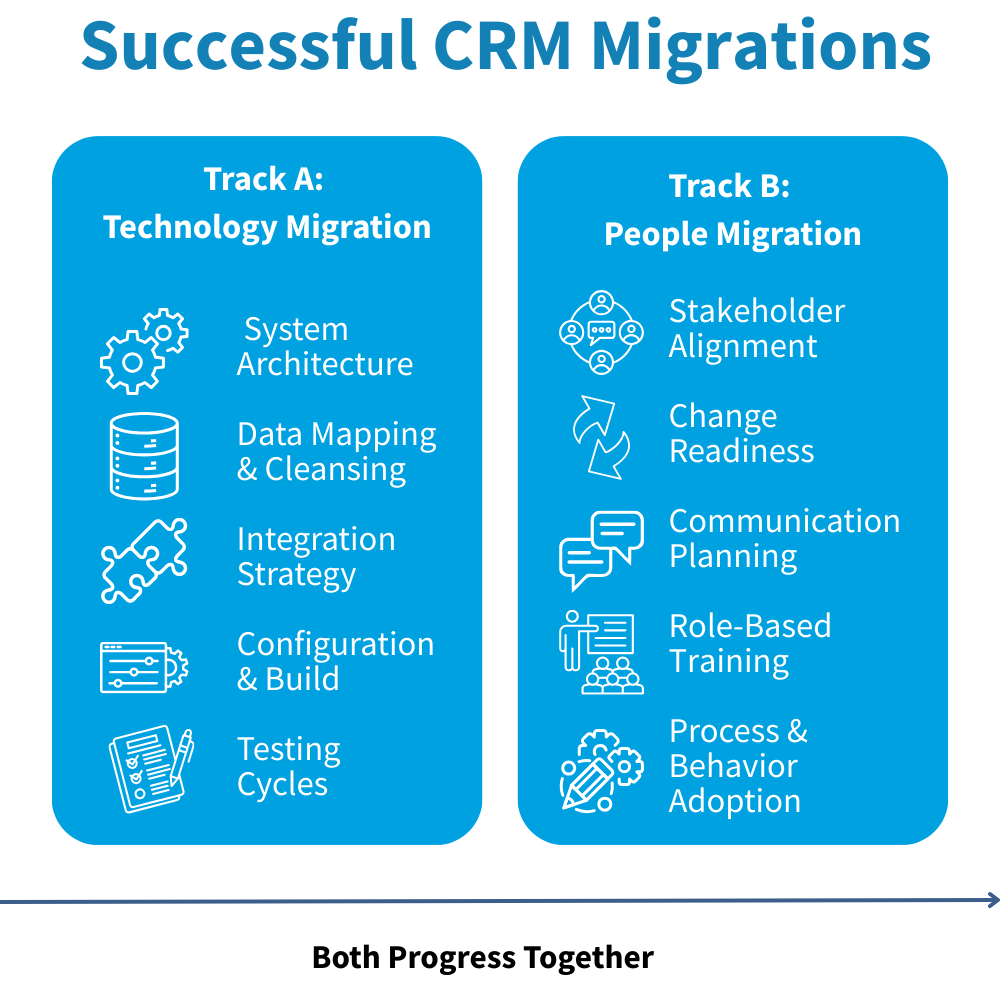
 

Successful CRM Migrations 

Cloud for Good’s Human-Centered Migration Model

Cloud for Good approaches change management in the impact sector by focusing on People-Centered CRM Migration for Nonprofits. We help organizations understand how new processes, data structures, and tools will impact daily work by aligning stakeholders early, mapping processes through a human lens, and creating clear, consistent communication around what’s changing and why. This reduces uncertainty, builds trust in the migration, and ensures teams feel informed – not surprised – throughout the project.

To drive adoption, we provide practical, role-based readiness through hands-on training, early access to real migrated data, and guided validation that helps fundraisers and staff see their donors and portfolios with confidence. We also empower internal champions and superusers to support their peers beyond go-live, strengthening collaboration and long-term system ownership. The result is a migration where users feel prepared, supported, and confident—enabling organizations to realize the impact of their Salesforce investment fully.

This human-centered approach is essential because CRM migration isn’t a technical journey; it’s an organizational one. In fundraising and advancement, resistance is rarely about “not wanting change.” Instead, it stems from fears of losing donor relationships, feeling unprepared, making mistakes, losing institutional knowledge, or looking unskilled in a new CRM system. These concerns can only be addressed with empathy, transparency, and guided readiness, not solely technical documentation.

Technology Enables Fundraising. People Elevate It.

Investing in Salesforce is a decisive step toward modernizing your fundraising or advancement operations. But technology alone doesn’t create transformation. In today’s nonprofit landscape, a people-centered CRM migration isn’t optional—it’s essential.

Real change happens through people.
Their confidence builds trust.
Their trust fuels readiness.
Their readiness enables adoption—with clarity instead of fear.
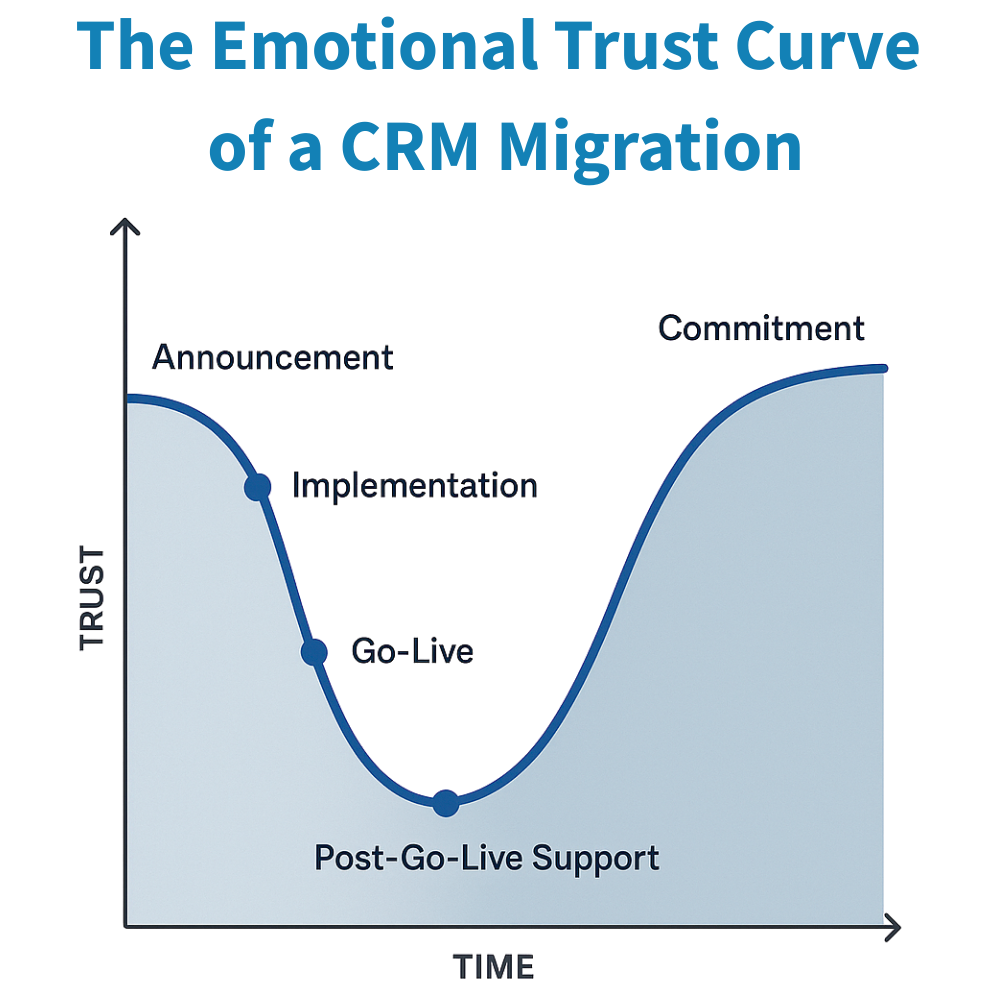
The Emotional Trust Curve of a CRM Migration

That’s why Cloud for Good leads with change management as the foundation of every successful CRM migration, because adoption doesn’t happen by accident—it happens by design. We partner with your teams to build trust, reduce resistance, and empower people to embrace Salesforce with confidence.

Ready to turn Salesforce adoption into real impact?
Get deeper insights with pur recorded webinar on, The Psychology of Change: The Human Science Behind Successful Salesforce Adoption, and learn how a people-first approach drives lasting success. Or, if you’re ready to take the next step now, connect with Cloud for Good to start your CRM modernization journey—together.

For Support and Services, Please Explore:

FAQ Section

Q1: Why do nonprofit CRM migrations fail?

Most nonprofit CRM migrations fail due to low user adoption, unclear communication, and mistrust of migrated data—not technical issues.

Q2: How can people-centered CRM Migration for Nonprofits be achieved?

Start change management early, involve teams in data validation, align definitions, and provide role-based training with real data.

Q3: What is people-centered change management?

A strategic approach focused on preparing users emotionally, behaviorally, and operationally for CRM transformation.

Q4: How long does CRM adoption take in nonprofits and higher education?

Full adoption typically takes 3–9 months post–go-live. Strong change management can significantly accelerate this timeline.