
By Cloud for Good
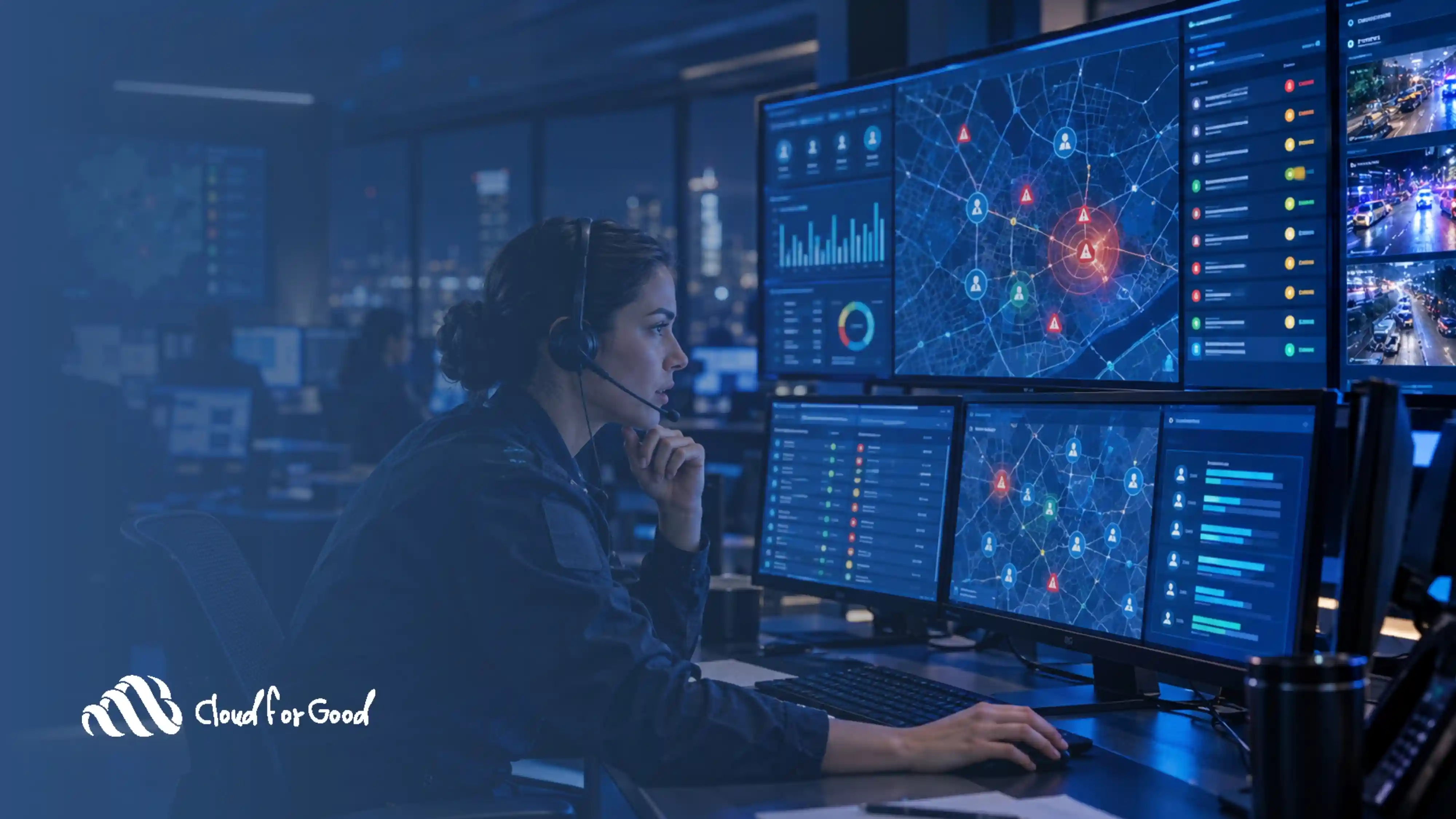
Emergency response coordination is one of the most consequential workforce problems in public service. The volume is staggering, the margin for error is zero, and the workforce managing it is spread across shifts, sites, and jurisdictions in ways no spreadsheet was built to track. AI changes what is possible here.
The gap between what these operations need and what most agencies currently have is well documented. A joint investigation published in September 2026 found that nearly half of surveyed dispatch centers in the United States failed to meet the national 15-second answer standard in 2025. In Washington, DC, payroll records showed just two shifts in all of 2024 where the dispatch center did not rely on overtime, with 40 percent of all hours worked being overtime hours. The International Academies of Emergency Dispatch described the operating condition plainly: when you are understaffed, you start the day in the hole.
The technology to close that gap exists. The question is whether it is connected correctly. A scheduling tool that sits beside the system of record instead of inside it cannot show a supervisor, in real time, who is available, certified, and legally eligible for the next assignment. That is the problem this piece is about.
Already thinking about this for your agency?
Book a discovery session with Cloud for Good.
The Problem Is the Disconnect, Not the Calendar
Most agencies already own a scheduling tool. The failure is that it runs on its own data, disconnected from certifications, labor rules, and live case information. So when a dispatch decision needs all of those at once, the scheduler cannot provide them.
A standalone scheduler holds a shift record. It does not know whether that person’s hazardous materials certification is current. It does not know the collective bargaining rule that governs who can be mandated into overtime. It does not know the incident, the work order, or the citizen waiting on the other end. So the facts that decide a dispatch, availability, qualification, location, eligibility, get entered twice, synced imperfectly, and drift out of date, precisely when an emergency arrives and demands they be true.
The DC dispatch center’s overtime dependence shows what this looks like in practice. When no system can show supervisors who is available, certified, and within legal shift limits in real time, mandatory overtime becomes the only coordination tool left. Oakland’s city auditors found the same pattern: overtime filling 34 percent of budgeted positions, with auditors noting the longer shifts wear workers down and make errors more likely. Overtime does not solve the visibility problem. It buries it.
The more distributed the workforce, the wider the gap grows. As of 2025, hybrid and flexible arrangements are a permanent fixture in most public sector organizations. When staff are spread across depots, regions, and remote assignments, no one person holds the live picture anymore. The spreadsheet becomes a record of what was true yesterday. The agency is not flying blind. It is flying on yesterday’s instruments, which is more dangerous, because it feels like sight.
Scheduling Belongs Inside the System of Record
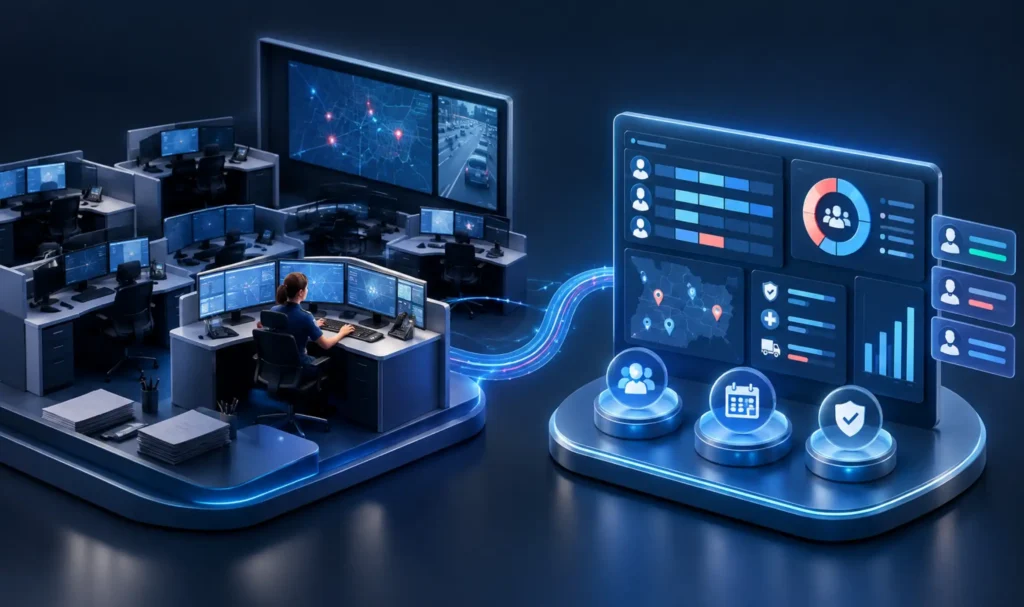
The answer is to stop treating scheduling as a separate system altogether and make it part of the record the agency already runs on.
That is what GoMeddo does. It runs natively inside Salesforce, so the schedule shares the same record as the operational data it depends on. Availability, certifications, union eligibility, location, and the work itself sit on one platform. The agency has one complete, current view of its entire workforce.
The consequences follow directly from that single design choice. A dispatch goes to the person who is available and certified for that specific job, checked against live data rather than a stale roster. A supervisor sees the entire distributed workforce in real time rather than reconstructing it from memory. Certification requirements and labor rules are enforced by the platform itself. When an incident reroutes a crew, the schedule and the work record update together because they are the same record. And because GoMeddo on AppExchange has passed Salesforce’s security review, the agency’s data stays inside its own environment, and the audit trail that public work demands is there by default.
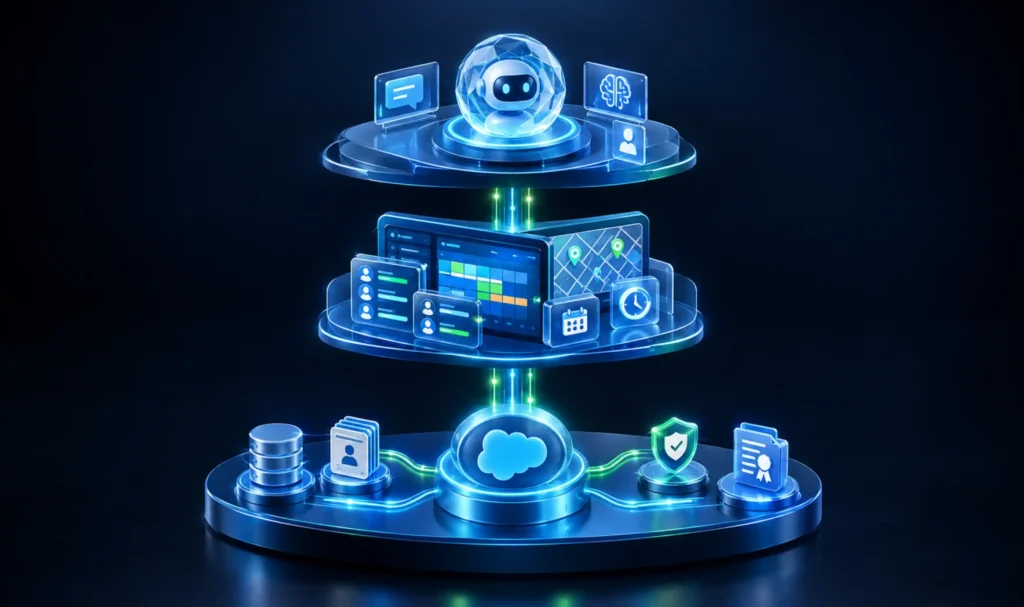
Because GoMeddo shares the record with the rest of the Salesforce platform, it also connects with Agentforce, so the same AI layer that guides a citizen through a request can help coordinate the workforce that fulfills it. Front-of-house and back-of-house on one platform.
See how Cloud for Good configures this for public sector operations.
Talk to our public sector team.
Why This Matters Beyond the Emergency
The emergency is where the disconnect turns visible and expensive. The same problem costs the agency every ordinary day: overtime that inflates pension obligations for years after the shift ends, double-booked resources, certified staff idle in one region while another scrambles. In DC, these are not edge cases. They are the default operating state.
This is also where government technology is heading. Deloitte’s 2026 government outlook describes leading agencies redesigning their operations so AI handles routine coordination while people concentrate on complex decisions, moving toward a model built on human and AI teams working side by side. A scheduling layer that shares the system of record is the foundation that makes that model possible. Intelligent coordination cannot run on data held in a disconnected system.
Fix the architecture, and the routine gets cheaper while the crisis becomes survivable. An agency does not rise to the level of its plan in an emergency. It falls to the level of its systems.
Where Cloud for Good Comes In
The hard part is understanding how a specific agency actually dispatches a crew, honors its labor agreements, and tracks its certifications, and then shaping the system to that reality. Configure to a generic default, and the agency spends years bending itself to the tool while the gaps stay open.
This is the work Cloud for Good does, and it looks concrete in practice. For one public sector inspection program, Cloud for Good built a mobile solution on Salesforce Public Sector Solutions that put inspection checklists in the field worker’s hands, let them capture violations with photos on the spot, and notified stakeholders without a return trip to the office. The manual steps between the field and the record disappeared, and the same information that scheduled the inspector now carried the result straight back into the system. Field work, scheduling, and record as one connected flow.
As a trusted Salesforce advisor, Cloud for Good maps how the agency runs before touching a setting, aligns the people who have to live with the result, and configures Salesforce, Agentforce, and GoMeddo to the operation rather than the reverse.
Let’s Map It Together
Emergency readiness starts long before the emergency. Sit down with the Cloud for Good public sector team and map how your workforce is coordinated today. Most agencies find the gaps earlier than they expected. Better to find them on a whiteboard than at two in the morning when the calls are already coming in.